Showing posts with label Technology. Show all posts

Wednesday, 16 October 2019

Facebook attempts to build public trust... and fails immediately.

A Biden attack ad from the Trump campaign
In audio leaked to US tech outlet The Verge earlier this month, Facebook founder Mark Zuckerberg riled against the suggestion of harsher government regulation of big tech, stating it would actually make election interference and hate speech more likely.

The CEO boasted about the company's superior ability to deal with these issues, slamming competitors such as Twitter: "Our investment on safety is bigger than the whole revenue of their company!”

As if by on cue, Facebook then proved how... urm... unsafe their platform was.

Only a week after Zuck's comments about safe elections and wanting to "build trust" with the public, Facebook refused to take down a Trump ad accusing former vice president Joe Biden of dodgy dealings with the Ukraine - a conspiracy theory spread by Trump that has landed him at the centre of an impeachment inquiry.

Facebook eventually took some versions of the ad down, showing they can deal with safety issues on their own platform. If only the ad hadn’t been displayed over 300,000 times before they decided it violated their policies…

Friday, 30 August 2019

Amazon relaunches dark-arts PR campaign powered by 'Borgs'

Amazon's small army of Fulfilment Centre Ambassadors began tweeting again last week about how great their employer is after the company's new ‘fulfilment centre' tours came under fire for appearing to be an attempt to undermine the endless accounts of ex-employees who have highlighted the poor working conditions in Amazon warehouses.

As part of Amazon's 'dark-arts PR campaign', fourteen 'FC Ambassador' accounts were launched in 2018 to join online conversations where they could fight Amazon's corner - countering criticism with monotonous talking points regurgitated with a 'nothing to see here' attitude. The accounts perk up every few months to parrot the same Amazon-approved lines on bathroom breaks, suitable wages, and competent management. And who would have guessed, they are also staunchly anti-unionisation - as they apparently make it difficult for employers to promote staff!

The accounts have been likened to zombie ambassadors, hive-minded Borgs, and have probably caused more bad PR for Amazon than they have sufficiently addressed. In January, the accounts began creepily changing ownership; an ambassador named Michelle who occasionally tweeted about her grandchildren regenerated into a twenty-something man named Rafael.

It is reported that on-the-floor workers selected to be ambassadors (of which at least four are British) receive an additional paid day off as well as a gift card in return for singing endless online praise for Amazon and its founder. For now, the propaganda accounts continue to be run by 100% real employees, however this is until they inevitably find a machine that can do it for cheaper - in true Amazon fashion!

Tuesday, 29 May 2018

The Cambridge Analytica scandal isn’t a scandal, it’s a business model

Cambridge Analytica recently closed down following a joint investigation from Channel 4 and The Observer which exposed that the company had been collecting Facebook user data without consent and targeting messages during the 2016 European Union referendum.

Since then, founder and CEO of Facebook, Mark Zuckerberg has faced questions from the US Senate; which mostly consisted of people who barely knew what they were talking about, piecing together semi-literate, broad questions which were mostly irrelevant. And, the EU Parliament; which entailed 75 minutes’ worth of very specific and nuanced questions followed by Zuckerberg speaking vaguely about general themes that came up, rendering both of these sessions rather pointless. Facebook needs proper scrutiny and despite what Zuckerberg thinks, the technology industry cannot regulate itself. This is evident by the fact that the recent Cambridge Analytica scandal was not caused because Facebook enabled it - rather, it was caused because they encouraged it.

Facebook’s business model is rooted in the notion that companies pay to target adverts based on user data that Facebook has collected. Despite what many might think, the customers aren’t the users, the customers are the organisations and businesses willing to pay for user data. What Cambridge Analytica did was simply an extension of this; they found a loophole.

Let's be clear, targeting political adverts based on user behaviour and interests is not illegal. If it was, Facebook would not be the tech behemoth it is today. They’ve been reasonably transparent about this too as they state exactly what data they collect and how they use it in their Privacy Policy.

Critics enjoy pointing that this is unethical as nobody reads privacy policies because they are too long - as The Wall Street journal pointed out, revised and condensed policies from 30 of the top apps still span the length of an American football field. They could shorten these policies however realistically, unless the whole policy can be summarised in less than 100 words, it is very unlikely that the majority of users are going to read it; a task that would be virtually impossible.

Facebook collecting data and aggregating it for advertising use is how they make their money. Yes, Cambridge Analytica went above and beyond to exploit this but ultimately, it’s not too different from any Facebook targeted advertising.

Saturday, 19 May 2018

When news isn't news

Modern news apps aren’t as ground-breaking as Google and Apple might think

At I/O 2018, Google announced they are relaunching their news app so it brings users a customised feed of stories based on their interests and what they've previously read. In short, this is Google's take on Apple News. These news apps, which are basically glorified RSS feeds, are well-intentioned however ultimately problematic. Technology promised to eliminate some of the issues associated with old media, however I fear that they've only made them worse.

The main issue is that letting an algorithm pick news for you based on interests you've told it and your reading history is not a good way to digest news. Google has proved their algorithms for generating content don't really work – as demonstrated by the YouTube Trending page where fake news, violent videos, and copyrighted material often surfaces to the top. To be fair, this isn't a problem limited to Google. Facebook makes a hash of providing news too. They spent the whole of 2016 doing nothing about the unchecked saturation of fake news circulating around their platform.

Secondly, displaying stories based on previous reads does not mean they are the pieces you should be digesting. Google says, through “reinforced learning,” the app will learn what topics and publishers you like. Apparently "the more you use it, the better it gets." However most people are drawn in by clickbait and non-stories with glorified thumbnails. Fall for them three or four times and presumably this means Google will start thinking that you have an appetite for pointless listicles and trivial news, so you will be shown more.

Thankfully, there is a simple fix to these problems: editors.

Call me old fashioned but what is wrong with allowing actual human beings to decide what are the most important issues of the day and giving stories some gravitas by putting them in the public eye? This would serve readers better too as it would diversify the topics that appear in the feed.

The obvious opposition to this idea is the fact that editors have biases. Of course they do. But, as do algorithms. It has been proved numerous times over the past decade that algorithms reflect the people who write them so they're not truly impartial either. At least with a group of editors, there is someone to hold accountable if you don't think the news is neutral.

In a society where there is now a large need for views to be challenged and news not to simply reinforce a person’s 'confirmation bias', Google News is doing little to address the challenges. In an ideal world, Coffee House blogs from The Spectator should be put in front of liberals and ‘Comment is Free’ think-pieces from The Guardian should be exposed to conservatives. Instead, it would appear that Google is keener to associate their news efforts with buzzwords like 'machine learning' and 'AI' in order to satisfy investors - rather than creating an information tool that would benefit society.

This is nothing new though. It's unlikely that someone on the political left would go out and buy The Daily Mail or someone on the right The Observer. However, technology has the ability to bring people more balanced news and to expose people to analysis that they might not agree with. Moreover, the companies which are providing platforms for news (Google, Apple and Facebook) have a duty not just to host the content but to prioritise the content which is actually factually correct. Simple as it may sound, this is something an algorithm currently struggles to do.

In Google's defence, they do try and partly address this problem. The news app has a tab called 'Headlines' which Google claims will help readers "understand the full story." On Stage at I/O, Trystan Upstill said, "Today, it takes a lot of work a lot of work to broaden your point of view and understand a story in depth. With Google News we set out to make that effortless." Cut through the waffle and fundamentally this is just a feed of top stories from a wide variety of trusted sources.

Inside of this, they’ve created a 'Full Coverage' feature which will allow users to see how a story is being covered from a variety of sources - including fact checking sites. Google says that everyone will see the same content in Full Coverage. "It’s an unfiltered view of events from a range of trusted news sources."

So why not build the whole app with this foundation, rather than hiding it in a niche corner of the app? When you open the app, you still land on the 'For You' tab which serves you a plate of sources you like the taste of.

Although Google – and others – have the capacity to incite positive change to the media landscape and democratise information to provide the world with more balanced news, Google News has the same problems as old news media, but in a modern format and with “light, easy, fast, and fun design choices.” Thanks for nothing, Google.

Thursday, 17 May 2018

Google's quest to end real life human interaction

Why talk to another person when you can talk to Artificial Intelligence?

Google I/O 2018 was where Duplex was announced
At Google’s developer conference earlier this month, the tech giant announced a new feature in Google Assistant called ‘Duplex’ which will make calls to organisations and businesses on your behalf. “Hey Google, book me an appointment at the barbers” - and voilĂ ! Google will make that very simple call that you are apparently too busy to make.

I am sceptical of this new gimmick. Ethically, Google Duplex will need to start every call by declaring that it is a bot. Legally, I don't see how this gets around the two-party consent needed in some US states for recordings to be made (as all the processing will be done on Google’s servers). And seriously, why does the voice speak with fillers like “urm” and “hmm”? Google has a lot of questions to answer.

Say what?
Even though CEO of Google Sundar Pichai says, “Duplex can understand the nuances of conversation,” I suspect the prospect of tech like this working seamlessly is still a long way off. When I was watching the keynote on YouTube (a Google company), I couldn’t help noticing that the automatically generated captions were still nonsensical drivel – proving that text-to-speech and vice-versa technology is still more of a novelty than a reliable tool.

In the demo, they got Google Assistant to call a 'real' hair salon and book an appointment. However the conversation still seemed rather simulated. I wonder how Duplex will respond to disgruntled, underpaid restaurant workers with a strong accents. Will Duplex give as good as it gets when called a “wee bint”?

Thinking about the future of this product, offloading scheduling calls that you don’t want to make to restaurants, masseuses, and alike are just the beginning. How long after the launch of Duplex will I be able to say, “Hey Google, catch-up with my best friend”? Then for it to call them; outputting extracts of my voice so it can murmur along and ask broad follow-up questions as they drone on and on about their banal endeavours in the club last night.

Tech giants like Google always appear to have altruistic intentions on the surface, however I can’t see many realistic long-term advantages of Duplex. It will only decrease actual human interaction and make the few interactions we do have with strangers more negative. What kind of message are you sending to the kabab shop or dry-cleaners if you get Duplex to call them rather than making the simple call yourself? You’re basically asking for your someone to gob in your doner meat or lose your knickers, Mrs I’m-too-important-to-deal-with-you-little-people.

I’m labouring the point here, but Google is making the large assumption that people will want to interact with bots. I know I certainly don’t. So, even though calls to businesses are often mundane, cherish these little pieces of actual human interaction whilst you can.

Wednesday, 17 May 2017

Google announces Android O and Android Go

Today, at the Google I/O developer conference, two new versions of Android were announced: Android O and Android Go.

'Smart Text Selection'
on Android O
Android O, like many Android releases in recent years, appears to be a small update which does not radically overhaul the user interface - or even do anything too noticeable. The highlights of the update will include: picture-in-picture capabilities, notification dots on app icons showing when there are notifications (like what Apple has been doing since the first version of iOS), and a new long touch feature which will display more options (presumably Android’s equivalent to Apple’s Force Touch).

Android O brings autofill from Google Chrome to apps so your passwords are remembered. Also, Google introduced 'Smart Text Selection’ for copy and pasting. It uses ‘machine learning’ to guess how many words users want to copy. This is to avoid “fiddling around with text selection handles.”

As you would expect with any software update, Android O will have increased security, a longer battery life, and offer better statistics for develops so they get more of an insight into crashes and bugs.

Google also announced Android Go; a version of Android with affordability as a top priority. It is for smartphones with less than 1GB of RAM and it will be shipping from 2018.

Android Go has a simpler OS, smaller apps which use less memory, and Data Saver automatically turned on. App developers are being encouraged to create smaller apps which will be promoted on the Play store for these phones. YouTube is paving the way as they have made a ‘lite’ app which is basic but allows users to download videos for offline playing or play videos with reduced quality.

Google has obviously seen a gap in the low-end market and Android Go is their way of bridging that gap. It might make Android a more appealing option to first time buyers in less economically developed countries. As for Android O, the updates may be small but they make for a better all-round user interface.

Google Lens: Android’s New Smart Camera

Today, at the I/O developer event, Google CEO Sundar Pichai announced Google Lens, a new camera app for Android.

Pichai began the event by acknowledging the gradual shift in how users interact with technology. Moving from mice and multi-touch to voice and VR. Google Lens fits into the latter of those categories.

The Google Lens app uses a smartphone’s camera to identify plants, buildings, and other kinds of objects before showing users what they can do with that information. For example, by holding the camera in front of a router, Google Lens will scan the Wi-Fi username and password then automatically connect the phone to the network. Also, the camera can extract information from movie/theatre posters to add events to Google Calendar accordingly.

The Google Lens app is a natural progression from Android N’s Google Assistant which analysed the information from any app to show users more information and functions relating to it. Instead of the screen, Google Lens takes the information from the world around you. It doesn’t just rely on the camera though. It pulls information from location services, the gyroscope, and other useful sensors to show augmented information.


Google’s VP of Engineering, Scott Huffman, demonstrated how Lens could be used to translate foreign words in real-time augmented reality however this is a feature that Google Translate and other similar apps have had for years now.

In the future, Google says Lens will be able to remove objects from a photograph - even large ones. In their demonstration, Huffman removed the chain fencing from a picture of a girl playing baseball. It is unclear whether this was a real example or simply a mock-up though.

Google Lens also works for pictures that you have already taken. By browsing your Google Photos albums, Google will be able to identify buildings, cars, and paintings to offer context. Google is also making it possible to extract website addresses and phone numbers from screenshots. OCR technology is nothing new but convenient I suppose.

The Photos app will also encourage you to share pictures with the people in them. Using facial recognition, Photos will scan faces and prompt users to share them with those people with a click of a button. Others can then add their photos to the album. Facebook currently runs a similar service however it is unlikely that Facebook Moments has anything close to the 500 million active monthly users like what Google is boasting.

The second new major feature in Google Photos is shared libraries. Users can now automatically share pictures of a certain person or from a certain date with someone they are close to. For example, if you want all the pictures you take of your children to be automatically shared with your wife, Google Photos can now do that. It can even share your whole library.

Shared libraries is a feature that is all shits and giggles until you get too close to your secretary at work. She invites you out for ‘work drinks’ which you assume is platonic but she has other intentions. Before you know it, you’re staggering out of a bar, half a bottle of wine still in your hand, and hailing a taxi to go back to her place for a night you’ll never forget. She suggests you take a playful selfie in the back of the cab, you put your arm around her and strike a pose kissing her on the cheek. Then BAM! It’s automatically shared with your wife who has spent all evening looking after your two young children - one of which is really struggling in school, you arsehole. What I’m getting at is that shared libraries can only end badly.

Google has thought about this though and are now offering a printed photo album service. It is called Google Photo Books and it will select your best photos to get printed in a physical album. A perfect present for your partner who you’re desperately trying to win back.

By in large, the updates to Google Photos and Google Lens seem to only build on what other services already offer and the innovation is small. Regardless, it is helpful that Google is pulling all this technology together and it is reassuring that Google continues to update these services. Google Lens will be available on smartphones running Android O however to me Lens would be suited better for an augmented reality headset more than anything else – a product line that Google has not touched since Google Glass in 2011 (which is now dead).

Sunday, 12 February 2017

Twitter attempts to curb online harassment

Over the last few years, Twitter has subject to excessive scrutiny over its inability to deal with online trolls and failing to make people feel safe on their platform. However, with a new safety policy that they announced this week, Twitter might be finally about to deal with online harassment.

Before this week, if users saw something they thought was unacceptable on Twitter, they could report it. However, there was no guarantee that anything would be done to resolve the issue. Twitter now says that the report tool has been strengthened. Plus, they have announced three new ways of dealing with online abuse.

Firstly, for serial harassers, Twitter is working on solutions to permanently suspend them from creating new accounts. The focus of this will be to prevent the creation of accounts that are created primarily for abusive content.

Secondly, Twitter is working its algorithm into tweet replies so harassment is filtered out. This will also bring to the top higher-quality tweets.

Finally, Twitter is currently developing a ‘safe search’ which will filter out potentially sensitive content and Tweets from accounts that you don’t want to see. 

According to Vice-President of Engineering Ed Ho, these modifications to Twitter aim to "give people more control over what they see on Twitter”. The changes will be rolled out to users over the next few months. 

Tuesday, 31 January 2017

My Six Favourite Podcasts

A person, probably a woman, talking and smiling into
a generic microphone. Little does she know that she is
the cover image for a post on my blog
I don’t listen to much music but I spend a lot of time on public transport and walking around in London. What a predicament! So, instead of listening to traffic or attempting to make conversation with strangers on the tube, I opt to listen to some of the many podcasts that I’m subscribed to. Here are my six favourites. 

(Note: From my choices, I think it will become quite clear what my interests are)


Commons People
This is The Huffington Post’s weekly politics podcast. It is light-hearted, fun, and the presenters are humorous but knowledgeable. Every episode, after discussion of the top news stories, there is a quiz about a topic that has been relevant in the past week. My favourites quizzes from previous episodes are: ‘Grammar or Bog-standard’, where the journalists needed to try and guess whether said politicians attended grammar, state, or private schools. And the ‘Morgan or Less Than’ quiz, where the journalists (with the help of Heidi Allen MP) needed to guess whether said politicians had attended more or less fringe events than Nicky Morgan at the Conservative Party conference… (Now I write this, I realise just how nerdy it sounds)


Page 94: The Private Eye Podcast
This witty podcast hosted by QI elf and Private Eye writer Andrew Hunter Murray is my favourite podcast. Each episode features discussions on politics, investigative journalism, or Private Eye culture to produce a truly fascinating listen. Highlights, for me, include the special episode commemorating Ian Hislop’s 30 years as editor, the episode about the Panama Papers, and the episode on revolving doors in politics. Wry humour and perspicacious politics journalism are a winning combination.

The Weeds
The Weeds is a Vox.com podcast hosted by journalists Ezra Klein, Sarah Kliff, and Matthew Yglesias. In each episode, they dive deep into US policy and politics. The episodes are very thorough and are great if you're interested in more niche US political news.

Coffee House Shots
One of The Spectator’s many podcasts is this short, irregularly occurring one called ‘Coffee House Shots’. Compared to the rest, this is a relatively short podcast yet it manages to summarise and offer analysis on important political events that have happened lately. In recent episodes, Isabel Hardman and co have discussed the UK Supreme Court’s Brexit ruling, Theresa May’s ‘shared society’ speech, and the battle for press freedom. 


Chips with everything
Chips with everything is a technology podcast from The Guardian. It includes the kind of high quality content you would expect from The Guardian. Notable discussions from recent episodes include an interview with the former deputy social media director for the Hillary Clinton campaign and a feature on how the Y2K bug came about. I’d recommend this podcast for anyone who has even a vague interest in technology or technology culture as they cover a wide range of topics. 


Sound Show
Sound Show is a podcast birthed from Joshua Topolsky’s new culture news website ‘The Outline’. This podcast, hosted by sound director John Lagomarsino, is a joy to listen to. Enthralling content and unbeatable sound quality go hand in hand to make this podcast a pleasure for my ears. Just take a listen for yourself:


All podcasts mentioned, plus thousands more, can be found on the Apple Podcasts app and other popular podcast services.

Monday, 12 December 2016

The 2016 MacBook Pro is a waste of money

In October, Apple announced an update to the MacBook Pro line. The 13-inch and 15-inch models are now thinner, lighter, and boast a Touch Bar. The Touch Bar sits at the top of the keyboard, replacing the line of function keys, and changes the menu options depending on what app you are in. Many guess this the closest Apple wants to get to creating a touchscreen Mac anytime soon. However, after a month of use, many have deemed it useless. And that is only where the problems with the 2016 MacBook Pro begin.

Dongles
For any computer aimed at professionals to be decent it needs to host a wide variety of ports so it is a versatile device. Apple have however scrapped the USB ports, SD-card reader, HDMI port, and Thunderbolt ports and replaced them all with USB-C ports which are still a rare oddity. Even the MagSafe charger port has gone which is a step backwards for Apple. Numerous times when I’ve tripped on my charger, the magnetic-ended cable has just clicked out of the port rather than sweeping a £1000 laptop onto the floor.

Apple was one of the first computer manufacturers to get rid of the optical disk drive in 2012 and although many found that irritating at the time, it wasn’t the end of the world because there was a trend in people downloading software and media from the internet rather than via a disk. Hardly anyone uses USB-C though so it is a nonsensical move from Apple as hardly any devices are compatible.

The lack of ports has forced many to delve into the ugly world of dongles simply to get their current cameras, chargers, external hard drives, monitors, and leads to work.

Lighter and Thinner
Why are tech companies obsessed with making lighter and thinner devices at the expense of functionality and battery life? If you want a lightweight MacBook, get the new so-called 'MacBook’ or MacBook Air. I, like many, would rather have a slightly heftier MacBook Pro though as long as it means getting a longer battery life, a deeper keyboard, and a more diverse range of ports. The old MacBook Pros are convenient because they are the sweet spot between the power and capabilities of an iMac but the portability of a MacBook Air. The new 2016 MacBook Pro compromises too much.

Touch Bar
The new Touch Bar is a great feature if you’re part of Apple’s marketing team as it makes the new MacBook appear special and your job easy, but, to everyone else, it's just an expensive gimmick. All the features and options you need already on screen so you can just use your mouse to click on them. The Touch Bar interface has been under scrutiny as well. On some menus you scroll, others swipe, and on others you press through menus. There is no uniform interactive language.

The only thing worse than a Mac with a Touch Bar is the prospect of a Mac with a touchscreen. But that, my friend, is a rant for another day.

Fashion
Half of the people who own MacBooks don’t even need them; a £300 Windows PC would be suffice for their word processing and internet browsing. So why do so many people own a MacBook? It’s a fashion statement. A key part of the appeal is the luminous Apple logo on the rear of the screen and the iconic start up chime. However, on the 2016 MacBook, in attempt to remove everything that people liked about MacBooks, Apple has removed both of these quirks. The Apple logo is still on the back but it is only reflective and the laptop now turns on silently.

Brexit
And here is the cherry on the top: it costs £500 more in the UK! Apple have raised their MacBook prices everywhere but many say that Britain has been subject to the steepest increase because of Brexit and the economic uncertainty that brings.


Overall, if you’re considering getting a 2016 new MacBook Pro, consider ye olde 2015 MacBook Pros first. They are just as powerful, have a battery just as long, but come with more ports, and a light up Apple badge. You should also ask yourself if you really need a MacBook Pro at all. Lenovo, Microsoft, Dell and HP all have exciting, practical laptops for the same price or cheaper that are just as good.


Sources
The Wall Street Journal: http://www.wsj.com/articles/macbook-pro-first-look-how-far-can-the-touch-bar-go-1477614296?mod=ST1
The Independent: http://www.independent.co.uk/life-style/gadgets-and-tech/news/apple-macbook-pro-price-brexit-uk-pound-value-cost-rise-a7384396.html
Casey Neistat’s Twitter: https://twitter.com/CaseyNeistat/status/803100297916805120

Wednesday, 19 October 2016

Modular smartphones are definitely not the future

In 2013, a tech start-up called Phonebloks teased the concept of a modular smartphone. The idea was, when you want an improved camera, longer battery life, more memory, or to upgrade any feature on your smartphone, you simply replace a compartment rather than go out and buy a whole new device. This would allow smartphone users to prioritise features. For example, amateur photographers could sacrifice speakers for a larger camera or if a longer lasting battery was developed, they could easily swap out their old one.

Project Ara
Google even toyed with the idea of bringing a modular phone to market for a while. They called it ‘Project Ara'. Google proved with prototypes that it was technically possible to make but on 2nd September 2016, rumours emerged that Google had shelved the project. This may have been with good cause.

Modular smartphones would never have been commercially viable. Forcing the customer to prioritise features when they could buy the latest Samsung, iPhone, HTC, or Google phone and get the best of everything would never have worked. Admittedly, I imagine many would be drawn to the personalisation aspect of owning a smartphone that they basically custom build. However, moto maker and quirky phone cases offer enough personalisation for many.

Furthermore, modular smartphones may have caused customers to be more hesitant before upgrading their phones which would ultimately cost the manufacturers in the long run. If consumers could simply buy a higher quality camera module every few years, they would think twice before splashing out on a whole brand new smartphone.

Although modular phones appear to have been scrapped, I hope that the technology developed for them is put to use on other products as it would be fascinating to see where modular technology might actually come in useful.

Friday, 8 July 2016

iOS 10: Lockscreen and Notifications

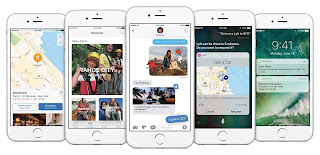
Today the iOS 10 Public Beta was released and I downloaded it in hope that it would bring a plethora of changes, small and large, which streamlined and improved the iOS experience. The update, although still a beta, is very stable and resembles iOS 9 in almost every way conceivable apart from the lockscreen and notifications.

Notifications are now large. Apple calls them “rich” however they just take up lots of space now which is inconvenient if you have lots of notifications to rifle though. The size of these large bubbles also means that you can’t see as many of them on your screen at once. This is more of a step backwards in innovation than a step forwards.

The widgets tab (accessible when you pull down from the top of the screen) used to be sleek and modern however in iOS 10, widgets looks like notifications and, like notifications, are inconveniently large. The widgets tab is now also accessible if you swipe to the far left on your homescreen or lockscreen - there is no escaping it! Widgets and notifications have become ugly hindrances rather than helpful in most cases.

On the lock screen, you can now interact with the huge notifications in a more dynamic way, access the widgets panel (as mentioned above), and access your camera by sliding right. Apple has ditched its iconic ‘slide to unlock’ method and replaced it with ‘press home to unlock’. This uses Touch ID to unlock your phone. Failing that, you are then presented with the passcode screen. It does seem like a security improvement as there are no longer multiple options for unlocking your phone and you are forced to use Touch ID first.

Also in iOS 10 are the addition of apps such as ‘Home’ and the ability to remove first party apps but these aren’t features that will be used by the average user. I will also admit that iMessage has been vastly improved however I don’t use iMessage so those new features will just get in the way when I need to text somebody.

And that, basically, is all that iOS 10 is. It’s a little disappointing that Apple seems to have ran out of ideas for the 10th version of its mobile operating system. They’ve changed notifications and widgets for the worse and the lock screen is different but probably just as productive as the old lock screen.


Friday, 17 June 2016

WWDC 2016: the most boring Apple conference yet?

Highlights include: 3x bigger emojis, the native ‘Stocks’ app can be deleted, and OS X is now called MacOS!


Apple’s Worldwide Developers Conference (WWDC) is the one of the most anticipated technology conferences every year. It is way bigger than Google I/O and it makes Microsoft’s Build look like a lame nostalgic reunion. The opening event at WWDC is iconic as it is when Apple shows off the next version of iOS to developers and the press. In the past, WWDC has been where products such as the iPhone, the redesigned Mac Pro, and the App Store have been announced as well as many significant upgrades to iOS. However the 110 minute opening presentation hosted by Tim Cook seemed extremely uneventful this year.

The main announcement regarding the Apple Watch was that apps will now load almost instantaneously (7x quicker than in the past, according to Apple) however that was expected in the first version of watchOS and it is embarrassing that it has taken Apple until version 3 to finally do it. This news was met with a surprisingly serious applause from the audience.

The main announcements regarding tvOS and OS X were that OS X is now called MacOS and Siri will be available on both. This isn’t exciting news though if you see Siri as a fun novelty rather than a useful tool - like what I expect most people do.

iOS 10: *yawn*
Apple had taken almost a hour to get onto iOS 10 and I was left with a feeling of disappointment when I learnt that the only major changes were that notifications have been redesigned so you can’t see as many of them on your screen now, and iMessage has turned into a complex multi-media experience with fireworks, scribbles, and emojis that are now 3x bigger.

Most of the keynote seemed to be spent talking about the newly redesigned Maps, Photos, and Music apps which were accompanied by awkwardly long demonstrations. It’s worth pointing out that most of the time when Google redesigns an app, they just release it without having to invite 5000 developers to gasp and applaud at the update in a self-indulgent display of hype building.

The most interesting news from Apple this month wasn’t even from WWDC; it was from a press release a week earlier which stated that they were restructuring the way apps can be purchased on the App Store. In the future, users will be able to subscribe to apps rather than buy them with a one off payment. This is something that will completely change how millions of people use their phones... yet it wasn’t mentioned even once at WWDC.

Maybe the problem is that Apple has just been too good. iOS is on its 10th version now and maybe Apple is running out of creative ideas to redefine smartphone software. So instead they are opting to refine what they already think is perfect and create as much hype about doing so as possible.

Sunday, 13 September 2015

Apple Surface / Microsoft iPad

Earlier this week Apple announced the iPad Pro. Remind you of anything?

Monday, 6 July 2015

Instagram to be in Full HD

Instagram is a social network based around sharing square pictures from your smartphone. Since the only way to upload pictures is from a mobile device (not a PC/Mac), the resolution of the images has been 640 x 640 ever since Instagram's launch in 2010. Since then though, cameras built into smartphones have come a long way and are capable of taking full HD pictures. This week, the source code on Instagram's website has revealed that photos are now being uploaded at 1080 x 1080 which suggests an update to the app in the near future will allow everyone to view the pictures at that quality.

Sunday, 5 July 2015

Canon PowerShot S120 review

The Canon PowerShot S120 is the 2013 successor to the PowerShow S110 and is the latest in the PowerShot S line. It costs around £200-£210 new and is a steal if you consider the multitude of features which come built-in.

It takes (4000 x 3000) 12.1MP pictures at shutter speeds varying from 1/2500 of a second to 250 seconds. The automatic camera mode produces crisp images with deep colours which is perfect for simply capturing a moment. Though, there are also modes that prioritise shutter speed or aperture and automate every other variable if you want a picture to look a specific way without the process of taking it being too complicated. There are also full manual, custom and program modes for people who like to fiddle with every setting.

If you'd like to apply an effect, the camera comes with dozens including fish-eye, miniature, and background defocus – which produces SLR styled images. The HDR effect produces pictures with vivid colours however if the subject is moving quickly, noticeable outlines appear which spoil the image.
 High Dynamic Range


There are also numerous filters and modes so the camera can adapt for any scene or environment. These include an underwater mode, a firework mode, a portrait mode, and an impressive star mode. The star mode split into a further three modes: one which simply takes high quality images of stars, another which takes a picture of star trails (works best on a tripod), and one which records a video of the stars moving across the sky (also works better on a tripod).
Star trail mode


There are also a handful of settings available on every mode and filter for continuous shooting, self-timing, changing the aspect ratio, and determining the image size (as well as the really basic settings such as adjusting focus manually and turning flash on or off). The continuous shooting setting allows users to take 12.1 shots per second for the first five frames and then 9.4 shots per second for all the frames following.

On the front of the camera there is a control ring which you can change what setting it tweaks. By default, it controls the 5x optical zoom in most modes. This extremely handy feature, which is uncommon on most point-and-shoot cameras, makes zooming easy and effortless.

The PowerShot S120 boasts the ability to wirelessly share or backup pictures. You can connect your phone or tablet to the camera via WiFi to review pictures as soon as they have been taken, or even connect the camera to an online service such as Flickr, Google Drive, or CANON iMAGE GATEWAY to back them up.

One of the things that the PowerShot S120 does best is record videos. It can record 1920 x 1080 Full HD videos at 60 fps. The two slow motion modes allow recording at 240fps at a compromised 320 x 240 resolution or 120fps at VGA quality (640 x 480).

Regular video recording does expose one of the S120's major flaws. The microphone, unlike previous models of this camera, is situated on the top which is great if you're trying to record audio in all directions, however poor if you only want to primarily record the sounds in front of you (like what most people will want). This means that there is often lots of unnecessary background noise - especially when recording in loud/busy places. If you can get over the sound niggle, the video quality is very good overall.

The build quality of the camera is very high. The metal and plastic body make the camera feel well built and like it could survive a few drops. The control wheel on the front feels especially sturdy and the 3-inch multi-touch screen on the back feels like it's not going to crack easily. One problem is the battery life though - or lack of it. The Canon battery really doesn't last long which is a shame since this is such a good little camera. Sadly, the more settings you change and the more modes you use, the less the battery seems to last.

Overall, despite the unfortunate misplacement of the microphone and the short battery life, the picture and video quality more than makes up for the flaws this camera has. The sheer amount of settings, modes, and features this camera boasts makes it a very good product - and the high build quality only adds to that. I'd highly recommend this camera for day trips and weekend breaks however you'll always need to pack the charger with you if you go anywhere for more than a few days as the battery will simply not last.

Saturday, 4 July 2015

Minecraft: as you've never seen it before

Today at Minecon 2015 in London, the trailer for Minecraft Story Mode was debuted. Despite the name, it is not actually a mode for the version of Minecraft that currently exists, it is instead a completely new standalone game. Story Mode, when released, will be an adventure game with a structured story line which will adapt to the player's decisions - rather than be a sandbox game like what Minecraft is where players can do whatever they want.

From what was revealed in the trailer, it can be gathered that the objective will be to defeat creepers, zombies, and other Minecraft monsters with a team of other characters. Although the trailer shows the game in third person, it's highly likely that the actual game will be first person just like what Minecraft is.

It is predicted that Minecraft Story Mode will arrive for computers, consoles and other devices later this year.


The best Vlogs on the Internet

Casey Neistat is a New York City based film maker known for his inimitable YouTube videos including 'Make it Count' for Nike and 'Bike Lanes'. In 2010, he also had a show on HBO with his brother Van. 100 days ago, on his 34th birthday, he took on the mammoth challenge of creating daily vlogs and uploading them on YouTube. They are beautiful short films (usually under 10 minutes long) which document his fascinating life.

Recurring topics which appear on the vlogs regularly include him talking very vaguely about his new business (which he hasn't provided the specifics of yet - or even what the company is called or does), question and answer sessions, spending time with his family, mail time, mooching around on a 'hover board' (see below), and lots and lots of meetings.

What makes these vlogs special, is the high quality in which they are produced. It's impressive that these videos have all been shot and edited in the same day. Everything in the vlogs from the beautiful time lapses of the New York City skyline to the gripping anecdotes he occasionally includes are fresh, unique and leave you wanting to watch more... Which isn't a big problem as another one is on it's way within the next 24 hours.

The first vlog:


Hover Boards:


One of my favorites:


Vlog 100:

Monday, 22 June 2015

Apple announce their first Android app - which helps users switch to iOS

At WWDC (Apple's conference for app developers) earlier today, the technology giant announced that they are soon going to be releasing their first Android apps. One of their new apps is called 'Move to iOS' which is designed to make the tedious task of moving messages, contacts, pictures, calendars, and books from an old phone to a new phone a lot easier - if your new phone happens to be an iPhone that is.

Even free apps which users have downloaded on their Android phone (such as Twitter, Instagram and Facebook) will appear as recommended apps on their new iPhone.

Although Apple hasn't seen a significant fall in profit recently, this new app should ensure that they keep winning over Android users.

Thursday, 30 April 2015

Microsoft encourages kids to code with Minecraft

During the second day of Microsoft’s annual developers' conference, they made an interesting announcement regarding Minecraft – the extremely popular sandbox game they bought for $2.5 billion last year. To encourage young people to get involved with computer science, they have added the ability to create Minecraft mods with Java into Visual Studio.

(A Minecraft mod – if you didn't already know – is a user created extension to the game. There are a diverse amount of mods available to download from the internet which do everything from add new bizarre blocks, to creating beautiful biomes.)